


China’s Yacht Industry: Policy Momentum, Innovation and New Investment Waves
- Boating-greece

- Apr 22
- 3 min read
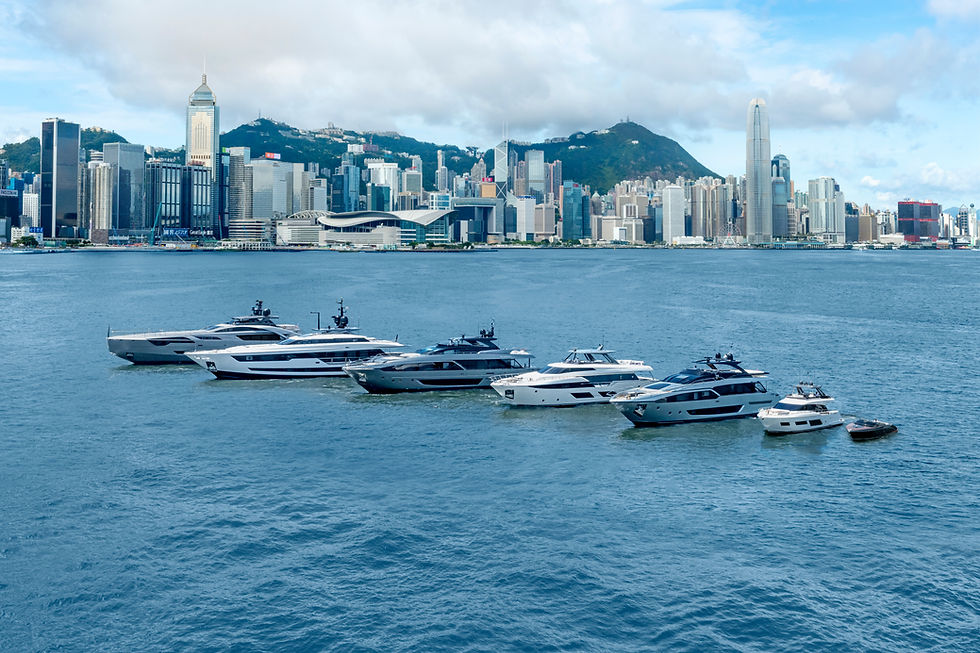
China’s yacht sector is entering a new phase of structured growth, supported by a combination of policy upgrades, regional cooperation frameworks and accelerating private investment. Over the past three years, newly registered yachts in the country have been growing by more than 40 percent annually, marking a shift from a niche luxury segment to a broader recreational and industrial ecosystem.
A key driver behind this expansion is the official recognition of yacht consumption as a strategic growth area. This repositioning reflects a wider effort to integrate leisure boating into domestic tourism, marine economy development and coastal urban planning. The industry is increasingly framed not only as high-end consumption but also as a scalable sector with long-term economic potential.
In parallel, regional clusters are being actively developed. In Zhuhai, authorities have initiated structured matchmaking platforms connecting government bodies, enterprises and financial institutions. These initiatives focus on the full value chain, including yacht design, research and development, new energy propulsion systems and marine support services. The objective is to build a cohesive industrial ecosystem rather than isolated manufacturing activity.
Technological transformation is another central pillar. Across coastal provinces, particularly in the Greater Bay Area, companies are accelerating the adoption of electric propulsion systems and intelligent navigation technologies. This shift aligns closely with national policy direction emphasizing sustainability and digital integration in maritime industries. Supply chain collaboration is becoming increasingly important as firms work together on green propulsion and smart onboard systems.
On the regulatory side, a notable milestone came with the revision of the Fisheries Law of the People’s Republic of China, adopted in late December 2025. For the first time, recreational maritime activities such as yachting have been formally incorporated into the legal framework. This provides clearer compliance structures and strengthens long term planning security for operators and investors.
One of the most significant developments is the expansion of yacht mobility within the Guangdong Hong Kong Macao Greater Bay Area. Following Shenzhen’s early pilot policy in 2022, which reduced administrative and financial barriers, the Guangdong Maritime Safety Administration released a draft implementation plan in 2025. This framework extends yacht free navigation across nine mainland GBA cities and introduces a dual licensing mechanism allowing Hong Kong and Macao yachts to obtain temporary mainland certificates valid for up to one year. The policy effectively enables freer movement and berthing across the region.
Further institutional support has been established through the creation of a provincial joint conference system in Guangdong. This mechanism coordinates cross border yacht mobility policies between Guangdong, Hong Kong and Macao, reducing administrative fragmentation and accelerating integration across the regional marine economy. It also aligns policy direction with recent industrial investments and infrastructure development in coastal hubs.
Alongside policy evolution, market activity is intensifying. A notable example is the Sea Expandary yacht project, officially signed in Guangzhou on February 24. The project, led by JD.com founder Liu Qiangdong, involves a reported investment of around 5 billion yuan to develop a new independent yacht brand. The initiative focuses on cost efficiency and new energy technologies, reflecting a broader trend of technology driven disruption entering the yacht manufacturing sector.
In addition, the Guangdong government is expanding its role in promoting marine leisure industries through investment conferences and international cooperation programs. During upcoming exhibitions, government representatives are expected to host foreign associations and industry stakeholders, organizing visits to Chinese shipyards and industrial bases. These initiatives are designed to strengthen international visibility and attract capital, technology and partnerships into the domestic yacht sector.
Overall, China’s yacht industry is transitioning into a more structured, policy supported and innovation driven market. The combination of regulatory recognition, regional integration in the Greater Bay Area and increasing private sector involvement suggests a gradual but clear shift toward a more mature marine leisure economy.


