


First Look: Vripack Reveals the Interior of the 69m Fossil-Free Sailing Yacht Project Zero
- Boating-greece

- Jun 10
- 2 min read

Dutch design studio Vripack has unveiled new renderings of the 69-metre sailing yacht Project Zero, offering an in-depth look at the vessel’s bespoke interiors, design philosophy and advanced renewable energy systems ahead of her launch in summer 2026.
Developed in collaboration with Dykstra Naval Architects and currently under construction at Vitters Shipyard, Project Zero is the result of six years of development. Rather than focusing solely on reducing energy consumption, the team adopted a radically different approach by designing the yacht around energy generation. According to Vripack, Project Zero is capable of operating for up to two weeks exclusively on renewable energy sources, without relying on fossil fuels.
The exterior pays tribute to classic sailing yachts while incorporating a wealth of custom details. Her striking metallic blue hull is complemented by a feather-inspired boot stripe, referencing the black-browed albatross that served as one of the project's key sources of inspiration. Features such as the spoon bow, sculpted stern cap and hand-painted wood-effect transom further enhance the yacht’s timeless character.

Inside, Vripack has embraced a holistic design language centred on natural materials and craftsmanship. Smoked European oak, reclaimed bark-based materials, leathered stone and carefully selected veneers create a warm and authentic atmosphere, while natural knots, cracks and grain variations have intentionally been preserved.
Curved architectural forms define the interior, extending across joinery, furniture, glazing and lighting to create a seamless flow throughout the yacht.

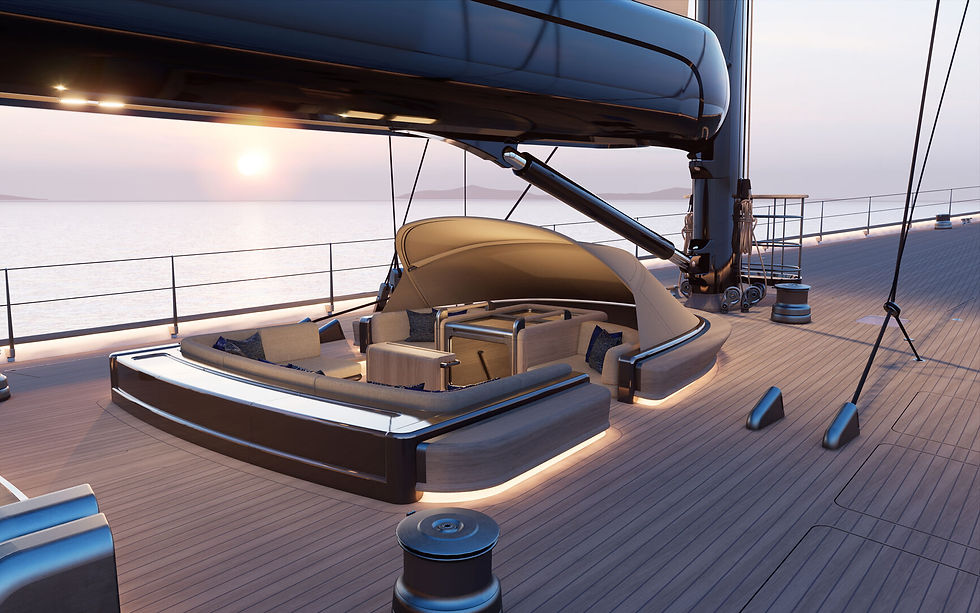
The owners' personalities are reflected in numerous details. In the main saloon, the dining table doubles as a puzzle and craft table for long periods spent onboard, while modular cockpit furniture can easily transition between lounge and dining configurations. Electrically operated windows further enhance flexibility, allowing exterior spaces to be enclosed at the touch of a button.
Accommodation comprises four staterooms, each inspired by destinations of personal significance to the owners, ranging from Italy to French Polynesia. The owner's suite is centred around the mizzen mast, wrapped in a bespoke artwork by American sculptor Sienna Martz, and also includes a dedicated office designed to support remote working while cruising.
Behind the scenes, Project Zero introduces an unconventional layout by eliminating the traditional full-beam engine room. In its place, a concealed service corridor allows the crew to move discreetly throughout the yacht while preserving guest privacy.
Sustainability remains at the heart of the project. Regenerative turbine propellers provide hydro-generation, while more than 100 square metres of photovoltaic thermal panels integrated into the biminis generate both electrical and thermal energy to power onboard systems.

Performance under sail has also benefited from a collaboration with Emirates Team New Zealand. Through advanced computational fluid dynamics analysis, the teams developed a distinctive topside curvature that reportedly improves sailing speed by 2.5 percent and increases electric power generation by approximately eight percent.

Scheduled for launch in summer 2026, Project Zero is shaping up to become one of the most innovative and ambitious large sailing yachts ever conceived, demonstrating how luxury, performance and sustainability can coexist in the next generation of superyachts.


